Why Mentorship Matters
Mentorship is more than giving advice. It’s about opening doors, building confidence, and finding community in your profession. Trainees and early-career hematologists can go farther if they have that extra guidance from the beginning. But finding a mentor is not always straightforward. That’s why ASH offers several award and training programs with mentorship included. Explore the resources on this page or visit our Awards website to see all of ASH’s offerings.
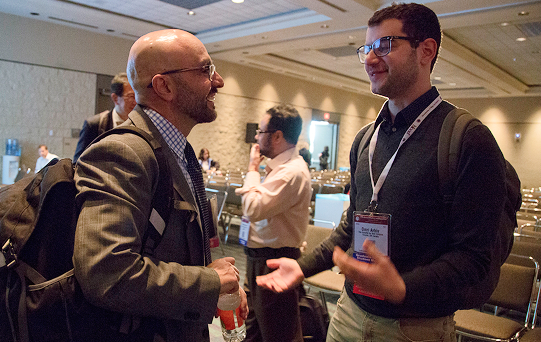
Jorge Di Paola, MD, (left) of Washington University in St. Louis, winner of the 2025 ASH Mentor Award in Basic Science, speaks with an ASH graduate student member at the annual meeting.
Mentorship in Medicine
Hematopoiesis: Evolving Mentorship in Medicine
"[My mentors] set aside time on multiple occasions to help us understand the complexities of securing a job we love, know what questions to ask, and ensure that the contract we would receive said what it was intended to say...With their guidance, I am happy to say that I did get my ideal first attending job, including a dedicated medical education role."
How Do I Find a Mentor?
Mentors can be found in many ways. Some seek them actively, while others connect organically. You may encounter a mentor during a tough case, at a medical conference, or via a registry like the American Medical Student Association. Mentoring is crucial for various ASH awards and training programs. Explore these opportunities or visit our Awards website for ASH’s offerings.

ASH-A-Palooza
Designed for undergraduates, medical and graduate students, residents, and fellows, ASH-a-Palooza provides a variety of opportunities for in-person trainees at the ASH annual meeting. Trainees can sign up for a one-on-one Blood Buddy 10-minute speed mentoring session with a faculty member.

Careers in Hematology Advancement Mentorship Program (CHAMP)
CHAMP is a unique, year-long opportunity for current first or second-year pediatric and adult hematology/oncology fellows with interests in clinical careers in classical and malignant hematology to be matched with an external mentor.

ASH-EHA Translational Research Training in Hematology
This unique, year-long training and mentoring program focused on helping early stage researchers, including senior postdoctoral fellows and junior faculty, gain the tools necessary to build successful careers in blood-related translational research.

Mentorship in HIP

ASH Global Research Award
Mentorship is a central component of the ASH Global Research Award (AGRA), which supports international early-career hematologists. ASH offers assistance in finding the two mentors required for each AGRA participant.

Medical Educators Institute (MEI)
This skills-building program sets junior faculty and senior fellows up for successful educational careers. MEI participants work with mentors, selected by ASH, who help them complete a scholarly project and give career guidance. ASH can also connect candidates with experienced "mentors" for the MEI application process itself.
Critical Research Training Institute (CRTI)
The ASH Clinical Research Training Institute (CRTI) is a unique, year-long education and mentoring program for hematology fellows and junior faculty at academic medical centers. CRTI offers a broad education on clinical research methods, research collaborations, statistical analysis, and the management of career and family demands. Its goal is to develop future leaders in clinical hematology.

Hematologists outside North America may also apply for one of ASH's global CRTI programs
- ASH Clinical Research Training Institution in Asia-Pacific
- ASH Clinical Research Training Institution in Mediterranean, Middle East, and North Africa
- ASH Clinical Research Training Institution in Latin America
Want to Become a Mentor?
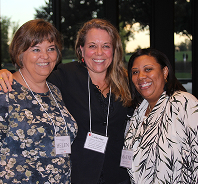
You didn’t get to this stage in your career alone. Being a mentor gives you the opportunity to make a positive impact on next generation of hematologists. Experienced members to volunteer their time and wisdom as mentors in various ASH programs. The demand for mentorship is high — please consider signing up today!
Making a Mentorship Work
A personal connection with someone more experienced can help you chart your career course and can ideally evolve into a career-long relationship. The right mentor will:
- Help you network with other professionals in the field
- Make time to work with you because they are invested in your success
- Support your work–life balance as a trainee
- Constructively critique your work so that you may learn from your mistakes

Questions to Ask Potential Mentors
Mentoring relationships can vary in purpose, so you may find that you end up having more than one mentor or mentee throughout your career. Consider asking these questions to better understand whether or not the potential mentor can provide you with the right development opportunities:
- Are you a "hands on" mentor? If not, who would provide me with direct supervision and teaching in the laboratory or clinical research setting?
- How often would I meet with you and in what setting?
- How many other trainees work with you?
- Would I be able to have input and/or choose between a number of possible projects? Or would I be expected or allowed to come up with a proposed project independently?
- Have any fellows who have worked with you gone on to independent research careers, academic positions, industry, or practice settings?
- Have you had experience in helping mentees obtain grants?
- What types of peer-reviewed publications do you see arising from potential projects? Will there be opportunities to publish review articles or book chapters?
- Do you have assistant or other editorial status on peer-reviewed journals? (Such a mentor may be able to involve a trainee more integrally in the peer-review process, the benefits of which include good practice in the critical appraisal of research studies; recognition for a worthwhile form of scholarly volunteer work; and expansion of knowledge of the most current concepts.)
Young faculty may not have had fellows work with them before. Do not automatically exclude them from your search but rather discuss with them the possibility of having a co-mentor who is a more senior person. Some institutions mandate that each trainee has a three-person research committee to provide a greater range of expertise and guidance for the trainee.
Further Reading
- “Mentoring for Life: The ‘Booster’ Effect of Example in Hematology Education.” The Hematologist. January 28, 2026.
- “Mapping expertise and educational needs for hemoglobinopathies: insights from HELIOS COST Action health care professionals.” Blood Global Hematology. March 1, 2026.
- “Finding “My People”: ASH Medical Educators Institute Helps Participants Build Connections” ASH Clinical News. March 2026.
- “ASH Members CHAMPion Long-Term Benefits of Hematology Mentorship” ASH News Daily. December 6, 2025.