Sickle Cell Disease
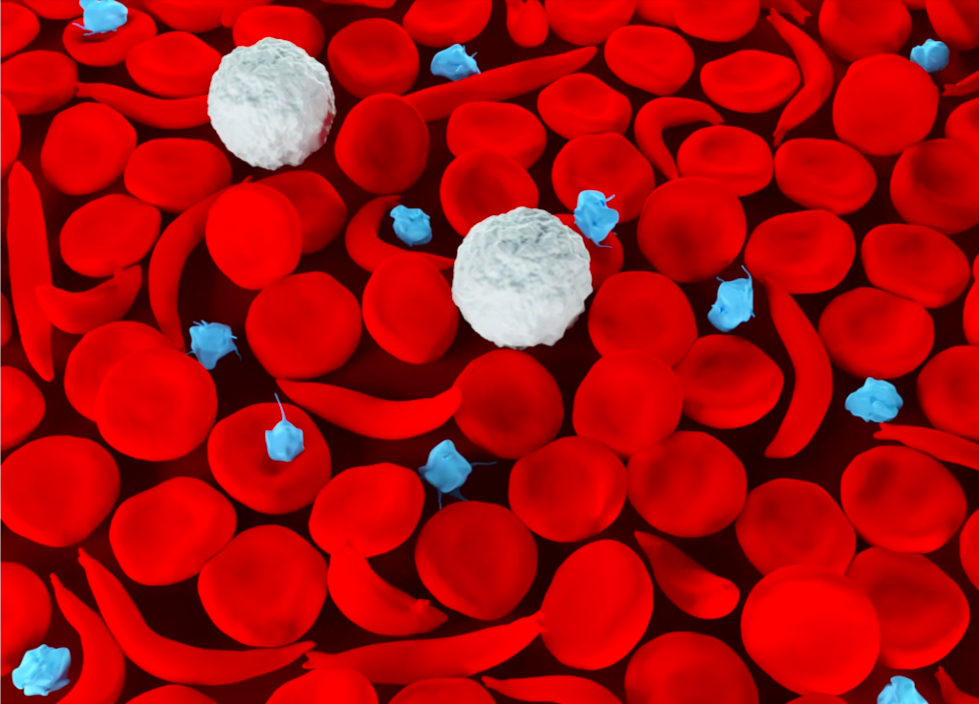
Approximately 70,000 to 100,000 Americans have sickle cell disease (SCD), the most common inherited blood disorder. Sickle cell disease is present at birth. People with SCD make an abnormal hemoglobin, called hemoglobin S. Hemoglobin is found inside red blood cells. It binds oxygen in the lungs and carries it to all parts of the body. Healthy red blood cells are soft and flexible (like a jelly donut) so that they can move through the smallest blood vessels. But hemoglobin S makes long chains of rigid red blood cells. These cells are also shaped like a "C" or sickle, causing them to get stuck and block blood flow. This causes pain and organ damage, especially to the spleen. In SCD, the spleen is often damaged early in life, making people with sickle cell disease vulnerable to certain bacterial infections.
Complications of sickle cell disease occur because the sickled cells block blood flow to specific organs. The worst complications include stroke, acute chest syndrome (a condition that lowers the level of oxygen in the blood), organ damage, other disabilities, and in some cases premature death.
For someone to inherit sickle cell disease, at least one parent must have the sickle gene, and the other parent the sickle gene or another abnormal hemoglobin gene. The most common type of sickle cell disease comes from two sickle cell genes, meaning one inherited from each parent with sickle cell trait. There are variations of SCD called sickle C or sickle thalassemia, which are serious conditions but are sometimes less severe. These occur when one parent has a sickle gene and the other has another type of abnormal hemoglobin gene. If you have sickle cell disease, you will pass one abnormal hemoglobin gene to your children.
Sickle Cell Trait
Sickle cell trait (SCT) is an inherited blood disorder that affects approximately 8% of African Americans. Unlike sickle cell disease, in which patients have the sickle gene and another gene for abnormal hemoglobin, individuals with sickle cell trait carry only one sickle gene. People with SCT typically live normal lives without health problems related to sickle cell. Rarely, extreme conditions such as severe dehydration and high-intensity physical activity can lead to serious health issues, including sudden death, in individuals with sickle cell trait.
Risk Factors
Sickle cell disease is more common in people with ancestry from places with malaria, including:
- People of African descent (among whom one in 12 carries a sickle cell gene)
- Hispanic Americans from Central and South America
- People of Middle Eastern, Asian, Indian, and Mediterranean descent
Early diagnosis of SCD is critical because symptoms can begin by four months of age. All newborns in the U.S. are now tested for the disease. SCD can be identified before birth by testing a sample of amniotic fluid or tissue from the placenta. People who carry the sickle cell gene can seek genetic counseling before pregnancy to discuss options.
Signs and Symptoms
Signs and symptoms of sickle cell disease can be mild or severe enough to require frequent hospitalizations. They may include:
- Tiredness
- Paleness from anemia
- Dark urine
- Yellow eyes
- Painful swelling of hands and feet
- Frequent pain episodes
- Being small for your age compared to other family members
- Stroke
Treatment
The only proven cure for sickle cell disease is a bone marrow transplant. This is typically done only when the patient has a relative who is an exact match. A matched non-relative, or a parent who is a half match for the person with sickle cell disease can also be a donor, but these transplants have higher risk. The U.S. Food and Drug Administration has approved gene therapy (taking the person’s on bone marrow and making it more normal) for treating sickle cell disease, but it is considered transformative — not curative.
There are no medications that cure SCD but there are treatments that help people manage and live with the disease. The most widely used disease modifying medication is hydroxyurea (sold under the brand Hydrea). It works by increasing the amount of fetal hemoglobin — which doesn’t have the sickle mutation — in the body. If fetal hemoglobin is added to the chain of sickle hemoglobin, it stops the chain from getting longer. It also makes the red blood cells less stiff and sickle shaped.
Some people with SCD need blood transfusions on a schedule to prevent problems like stroke. Others may get a blood transfusion when they’re very sick. SCD pain symptoms can be managed with ibuprofen or opioids. Infection risk can be managed with penicillin taken every day, additional immunizations in childhood, and other options as needed.
Clinical trials provide access to experimental therapies for treating sickle cell disease. ASH provides information on clinical trials for which you may be eligible. Researchers are looking at new drugs and new types of gene therapies.
Talk with your doctor if you believe you may have sickle cell disease. If you carry the sickle cell trait, tell your doctor before getting pregnant as well. Depending on your condition, your doctor may refer you to a hematologist, a doctor who specializes in blood conditions.
Advances in Sickle Cell Disease
The treatment and care of patients with SCD has come a long way since researchers first identified the disease more than 100 years ago.
View the SCD Milestone Timeline
Where Can I Find More Information?
If you are interested in learning more about blood diseases and disorders, here are a few resources that may be helpful.