Roland B. Scott-Charles Drew Excellence in Equity Award
(Formerly the ASH Advancing Inclusive Excellence Award)
ASH continues to lead efforts to recognize individuals who work to remove barriers that prevent the full participation of all communities in hematology. This award is named after the late Roland B. Scott, MD, and the late Charles Drew MD, CM, MDSc, two trailblazers who exemplified the qualities that this award honors and who each left a legacy of vastly improving patient care and opening doors for future hematologists.
An individual may be nominated for one or all of the following:
- Significant leadership/mentorship that has benefited the career development of trainees from groups that experience disproportionate social disadvantages
- Contributions that have led to a more inclusive hematology workforce
- Commitment to these principles within ASH
- An unflagging drive to eliminate health disparities in the care of hematology patients
If you know someone who meets the criteria for this award, please complete and submit a nomination form.
Eligibility Criteria
Inclusion
- The nominee does not need to be an ASH member.
- The nominator must be a member of ASH. Not an ASH member? Apply today.
- Nominees should be actively involved in addressing barriers to success because of disproportionate social disadvantages (often tied to race/ethnicity, gender, sexual orientation and identity, or disability).
- Nominees of all nationalities and all countries of residence are eligible; however, all nomination materials must be submitted in English.
Exclusion
- Self-nominations and posthumous nominations will not be accepted.
- Past recipients are not eligible for the award.
- Recipients may only receive one honorific award per year.
- Voting members of the ASH Executive Committee and the ASH Awards Committee are ineligible for an honorific award during their tenure.
Additional Guidance
Nominations for the award are accepted throughout the year. Before getting started, please review the Roland B. Scott-Charles Drew Excellence in Equity Nominations Guidance document, which provides additional information about the award and guidance on crafting an effective nomination letter.
The following documents are required in order to submit a nomination package:
- A completed nomination form
- A copy of the nominee's current CV or a copy of the nominee's NIH biosketch (preferred) annotated with “Contributions to Science,” if available
- A two-page letter of nomination summarizing the nominee's extraordinary commitment to equity and inclusion in the field of hematology (please refer to the Roland B. Scott-Charles Drew Excellence in Equity Nominations Guidance document for recommendations on writing an effective nomination letter)
- Optional: One additional two-page letter of support will be accepted but is not required; multiple people are allowed to sign one letter.
THE PIONEERS BEHIND THE AWARD NAMES
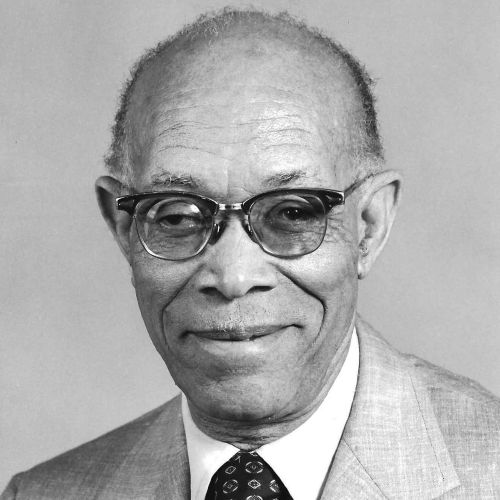
Roland B. Scott
Roland B. Scott, MD, (1909-2002) is credited with establishing the foundation of the clinical and policy framework for sickle cell disease (SCD). As early as 1955, Dr. Scott reported one of the first detailed U.S. case series of hemoglobin SC disease in siblings, documenting anemia, splenomegaly, and hereditary transmission patterns. Additionally, he was among the first to report growth impairment, recurrent fevers, and acute pain episodes. These early clinical descriptions provided the first data-driven foundation for the management of pediatric SCD.
Dr. Scott also wrote a series of articles highlighting the inadequate funding allocated to research and patient care for children with SCD. In both JAMA and the New England Journal of Medicine, he made the case that sickle cell anemia is paradoxically characterized by “high prevalence and low priority,” highlighting the profound neglect of the genetic disease in the U.S. These publications provided the groundwork for the 1972 Sickle Cell Anemia Control Act, landmark legislation that established federally funded treatment and research centers, screenings, and education initiatives for SCD.
To learn more about Dr. Scott, please visit this Howard University webpage.
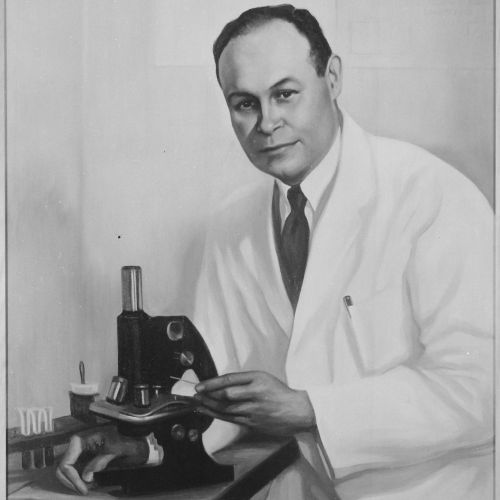
Charles Drew
Charles Drew, MD, CM, MDSc, (1904-1950) was a professor and head of the Department of Surgery at Howard University Medical School and chief surgeon of Freedmen's Hospital, one of only two Black hospitals in the U.S. at the time.
While working toward his doctorate, Dr. Drew focused his research on blood preservation techniques, such as de-liquification, which eventually led him to oversee the “Blood for Britain” program during World War II. He was later appointed director of the first American Red Cross Blood Bank at Presbyterian Hospital and assistant director of blood procurement for the National Research Council. In these positions, Dr. Drew’s strategy on blood preservation informed large-scale transfusion practices at the height of World War II, saving thousands of lives.
To learn more about Dr. Drew, please visit this American Chemical Society webpage.
Award Recipients
Recipients of the Roland B. Scott-Charles Drew Excellence in Equity Award (For the years 2025 and earlier, recipients were honored with the ASH Advancing Inclusive Excellence Award)
Related Programs
The Hematology Inclusion Pathway offers a comprehensive 13-year longitudinal career pathway of awards that strives to ensure that hematology reflects and serves the world we live in– from medical students to mid-career professionals.
The HIP Initiative aligns with ASH’s commitment to excellence through expansion and inclusion and reflects an evolving understanding of the hematology community.
With HIP, we’re continuing to expand the availability of hematologic care while promoting the highest standards of excellence in hematology research, training, and practice.
Questions?
For assistance or more information about ASH honorific awards, please contact the Awards Department at [email protected].