J. Evan Sadler Award for Mentorship and Bernard Forget Award for Mentorship
(Formerly the ASH Mentor Award)
Mentorship is one of the most important determinants of a successful career in hematology, yet it is rarely rewarded. In recognition of the value the Society places on mentorship, the J. Evan Sadler Award for Mentorship and Bernard Forget Award for Mentorship were created. These awards are named after the late J. Evan Sadler, MD, PhD, and the late Bernard Forget, MD, who were long-standing members and volunteer leaders of the Society. Each year, these awards honor two outstanding mentors drawn from the areas of basic science, clinical investigation, education, or clinical/community care. Both nominees and nominators for this award must be ASH members.
Superb mentors from any of the different branches of hematology are eligible for this award, including adult or pediatric hematologists; academic or community practitioners; basic, clinical, or translational researchers; hematopathologists; transfusion medicine specialists; educators; and individuals working in industry or government. Awardees are expected to have had a sustained career commitment to mentoring, a significant positive impact on their mentees' careers, and through their mentees advanced hematology research and/or patient care.
If you know someone who meets the criteria for this award, please complete and submit a nomination form.*
*Please note: Both mentorship awards share the same application form. The ASH Mentor Award Study Section and the ASH Awards Committee will select a recipient of each award from the same application pool.Award Criteria
The award is based on the training experiences and success of the nominee’s mentees, not the mentor’s personal career achievements. For the purpose of this award, mentoring is defined as the process of guiding, supporting, and promoting the training and career development of others. The key roles of a mentor include, but are not limited to, providing:
- Intellectual growth and development
- Career development
- Professional guidance
- Advocacy
- Positive role modeling
Eligibility Criteria
Inclusion
- Both nominees and nominators must be members of ASH. Not an ASH member? Apply today.
- Nominees of all nationalities and all countries of residence are eligible; however, all application materials must be submitted in English.
- Nominees may include adult or pediatric hematologists; academic or community practitioners; basic, clinical, or translational researchers; hematopathologists; transfusion medicine specialists; and individuals working in industry or government.
- Nominees should have a sustained record of mentoring over time.
- Nominators must be mentees of the nominee or colleagues who have personal knowledge of the nominee’s mentoring efforts.
- Mentees should be actively involved in research, teaching, mentoring, clinical care, or other leadership activities.
- The nominator, primary mentee, and secondary mentee must be three separate individuals.
Exclusion
- Prior recipients of the award are ineligible for future mentor awards.
- Voting members of the ASH Executive Committee, ASH Awards Committee, and ASH Mentor Award Study Section are ineligible for the award during their tenure.
- Self-nominations and posthumous nominations will not be accepted.
Additional Guidance
Nominations for this award are accepted throughout the year and may be made by any ASH member, based on either having been mentored by the nominee or by having observed the mentoring provided to others by the nominee. It is suggested that nominees participate in the process of assembling the nomination package, since their mentoring achievements may have spanned many years, beyond the experience of individual mentees.
The following documents are required in order to submit a nomination package:
- A completed nomination form
- A copy of the nominee's current CV or Biosketch (preferred)
- Three letters of recommendation:
- A letter, written by the nominator, summarizing the impact of the nominee on the training/careers of his/her mentees
- Two letters written by a primary and a secondary mentee (can be former or current mentees) who can each provide a first-hand account of how the nominee influenced his/her career. Academic, clinical, and educational achievements on the part of the mentee will be considered important.
- The nominator and two mentees must be three different people.
- Reviewers look for a balance of letters from colleagues and mentees spanning the nominee’s career in mentorship.
- Please refer to the Nomination Guidance document to learn how write an effective nomination letter.
- Optional: Up to three additional letters of support from junior and senior faculty will be accepted but are not required. Ideally, at least one letter should be written by a mentee who can provide a first-hand account of how the nominee influenced his/her career. Academic, clinical, educational, and regulatory achievements on the part of the mentee will be considered important.
Nominations that are not formatted correctly, contain incorrect documents, or are missing required documents will not be considered.
Provided are some examples of questions that should be answered within the nomination packet to provide the level of detail the study section expects in reviewing submissions for the award. Please note that this list is not complete and simply includes examples for you to use in preparing your nomination:
- Most of the nominations received are for outstanding candidates. Therefore, please provide details on what distinguishes your mentor from the others.
- Are there specific examples where the mentor remained involved in your professional development, or that of other mentees, on an on-going basis, after your career was started? Was there a difference in support for those that stayed at the mentor’s institution compared with those that went elsewhere?
- How does your mentor handle stress, disappointment, or setbacks involving his/her mentees? Describe the environment/atmosphere your mentor provides.
- How has your mentor intervened to help you make specific decisions regarding the path of your career? How helpful is your mentor in negotiating job offers, both at the home institution as well as others?
- How does your mentor balance things in their own lives from your perspective and how does he/she promote this balance for their mentees?
Evaluation, Selection, and Notification
The award study section includes, but is not limited to, one chair and one member from each of the following committees:
- ASH Awards Committee
- ASH International Members Committee
- ASH Committee on Practice
- ASH Committee on Advancing Excellence and Population Health
- ASH Committee on Training
- ASH Trainee Council
Nominations are scored based on the overall strength of the nomination package and the following award criteria: 1) intellectual growth and development, 2) career development, 3) professional guidance, 4) advocacy, and 5) positive role modeling. Each of these is scored individually; therefore, the nomination package and letters of recommendation should provide sufficient detail and specific examples that speak to each of these elements.
Final selections are based on a consensus of the entire study section and are sent to the ASH Awards Committee and the ASH Executive Committee for final approval.
A nomination is used for three nomination cycles.
THE PIONEERS BEHIND THE AWARD NAMES
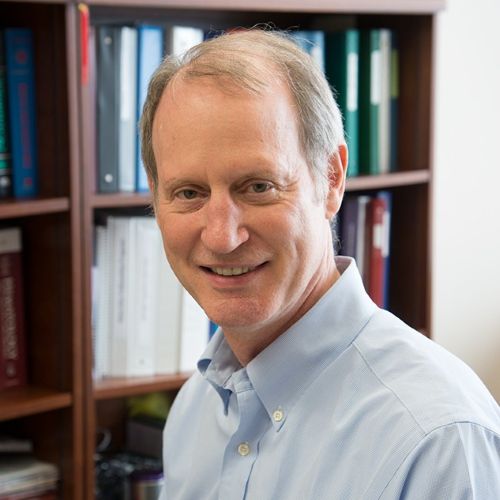
J. Evan Sadler
Over the course of his career, J. Evan Sadler, MD, PhD, (1951-2018) who served as the director of the Division of Hematology at the Washington University School of Medicine and the Ira M. Lang Professor of Medicine, mentored approximately 100 graduate students and postdoctoral fellows, including several dozen throughout his tenure with the Howard Hughes Medical Institute. He was known for being a generous advisor, advocate, and sounding board for many trainees and early-career investigators across the hematology community.
Beyond his mentorship and teaching roles, he was a world-renowned investigator in hemostasis and thrombosis, responsible for seminal work on the structure-function relationships of von Willebrand factor and the ADAMTS13 protease. His body of work helped illuminate mechanisms underlying bleeding and clotting disorders, and his insights have significantly shaped current understanding and treatment paradigms. Dr. Sadler held numerous leadership roles throughout his career, including ASH president in 2011.
To learn more about Dr. Sadler, please see this obituary from The Hematologist.

Bernard Forget
During his career at Yale University, which included the roles of section chief of hematology and associate dean for research affairs, Bernard Forget, MD, (1939-2015) was credited with cultivating a culture of academic excellence and mentorship, emphasizing scientific inquiry, patient-centered care, and professional development. He built a robust clinical research infrastructure at Yale and instilled a tradition of intellectual rigor and collaboration that persists to this day.
Dr. Forget’s research was foundational to understanding the molecular basis of red blood cell disorders, including work on human globin genes that advanced the understanding of hemoglobin synthesis and regulation. He also investigated the spectrin gene family and the molecular mechanisms underlying hereditary spherocytosis, which helped define how structural protein defects can contribute to hemolytic anemia.
Dr. Forget was awarded the Henry M. Stratton Medal from ASH in 1996 and previously served as a Councillor on the Executive Committee from 1990 through 1993.
To learn more about Dr. Forget, please see this obituary from The Hematologist.
Award Recipients
J. Evan Sadler Award for Mentorship and Bernard Forget Award for Mentorship Recipients (Formerly the ASH Mentor Award)
Questions?
Questions about the ASH J. Evan Sadler Award for Mentorship and ASH Bernard Forget Award for Mentorship may be directed to [email protected].